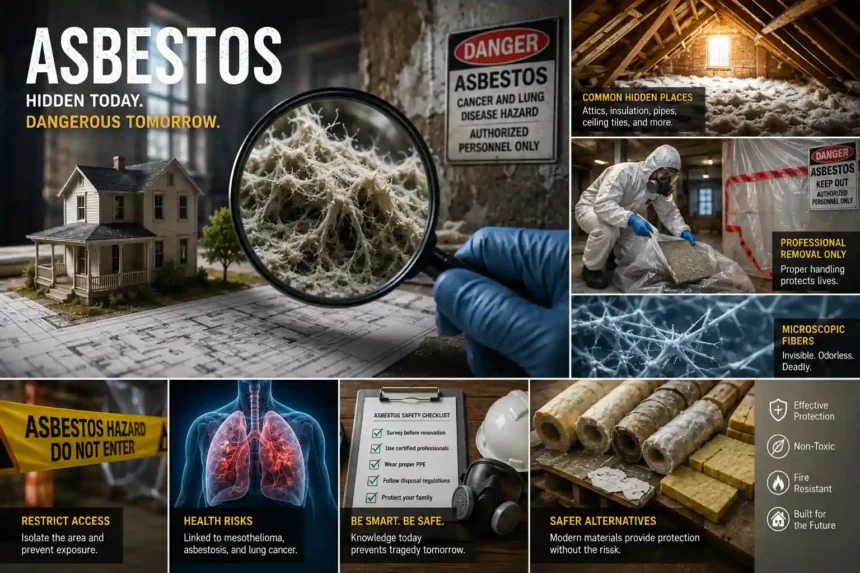
Asbestlint is a fine, fibrous dust released from asbestos-containing materials when they age, crack, or get disturbed. The particles are microscopic — invisible to the naked eye — and can stay airborne for hours after a single disturbance. Because it looks like ordinary dust, most people never realize they’ve been exposed until serious damage has already occurred inside the lungs.
Its presence is not limited to demolition sites or industrial zones. Millions of homes, schools, and public buildings built before the 1980s still contain asbestos materials that are slowly breaking down. Understanding what asbestlint is and where it forms is the first step toward protecting yourself and the people around you.
What Is Asbestlint?
The word asbestlint comes from Dutch — asbest (asbestos) and lint (tape or strip). In practical use, it refers to two distinct things:
- Asbestos-containing tape or woven strip — a historical building material made from real asbestos fibers, used widely from the early 20th century through the 1980s and 1990s.
- Asbestos warning tape (afzetlint) — modern plastic or polyethylene barrier tape printed with hazard warnings to mark contaminated zones.
The first type is dangerous. The second is a safety product.
In broader modern usage, the term also describes the fine airborne dust shed by deteriorating asbestos-containing materials in buildings. This is the context most relevant to health and safety discussions today.

History and Significance of Asbestlint in Construction
Asbestos was considered a miracle material through much of the 19th century and early 20th century. It was cheap, durable, fire-resistant, and an excellent insulator — properties that made it attractive across construction, manufacturing, and shipbuilding industries.
Widespread use continued until medical research began linking it to serious disease. By the 1980s and 1990s, most developed countries introduced bans and strict regulations limiting asbestos production and sale. The shift reshaped how buildings were constructed — but it didn’t remove the material already installed in millions of existing structures.
Today, the significance of understanding asbestlint lies in that legacy. Buildings constructed before the 1980s remain a primary concern for public health globally.
Common Building Materials That Contained Asbestlint
Asbestos was incorporated into a wide range of building components. Recognizing these materials is important before starting any renovation or repair work.
| Material Type | Common Application |
| Pipe insulation | Hot water pipes, steam pipes |
| Boiler coverings | Heating systems, furnaces |
| Ceiling tiles | Popcorn ceilings, suspended ceilings |
| Floor tiles & adhesives | Vinyl floor tiles, linoleum backing |
| Roofing sheets | Corrugated cement roofing, siding |
| Cables and ducts | Electrical fireproofing, duct wrapping |
| Vermiculite insulation | Attic insulation fill |
| Gaskets | Industrial equipment seals |
These materials were often white, gray, or slightly yellowed and had a fibrous, woven, or braided texture. Many are still in place behind walls, in basements, and in technical rooms of older structures.
How Asbestlint Forms and Spreads in Buildings
Asbestos doesn’t become hazardous simply by existing. The danger begins when materials start to deteriorate or get physically disturbed.
Aging causes asbestos-containing materials to crack and crumble. Moisture, temperature fluctuations, and years of wear and tear all accelerate this breakdown. Once the surface weakens, fibers begin shedding passively — without any human activity triggering it.
Renovation work dramatically increases fiber release. Drilling, cutting, and sanding old materials can generate heavy concentrations of airborne dust within seconds. Even less obvious activities — like removing old floor tiles or opening a wall cavity — can disturb asbestlint and spread it throughout a space.
Airflow plays a role, too. Fans, AC units, and ventilation systems can carry fibers from a single disturbed source into other rooms, compounding the exposure risk across an entire building.
Common Environments and Places Where Asbestlint Is Found
Asbestlint is most concentrated in locations where asbestos-containing materials were heavily used and have since been left to age without management.
High-risk environments include:
- Residential attics and basements — particularly those with vermiculite or pipe insulation
- Old construction sites built before the 1980s
- Shipyards where asbestos was used extensively for fireproofing
- Asbestos textile factories that processed raw fibers into cloth and protective gear
- Mechanical rooms and boiler rooms with degrading pipe insulation
- Abandoned buildings where materials have crumbled over time
- Schools, hospitals, and warehouses with older ceiling tiles and wall panels
- Air ducts and ventilation systems that carry fibers from deteriorating internal insulation
The shared characteristic across all these environments: materials that are old, damaged, and no longer sealed.
Why Asbestlint Is More Dangerous Than Regular Dust
Standard household dust settles quickly and gets removed by the body’s natural defenses. Asbestlint behaves very differently.
The fibers are microscopic, needle-like, and extremely light — meaning they stay airborne far longer than ordinary particles. Once inhaled, they travel deep into the lower airways, where the immune system cannot effectively break them down. The fibers remain embedded in lung tissue indefinitely.
What makes this especially dangerous is the absence of warning signals. There is no smell, no visible color, no irritation at the moment of exposure. A person can breathe in a significant quantity of fibers during a single renovation session and feel completely fine. There is no safe level of asbestos fiber inhalation — even minimal exposure carries risk.
Smokers face compounded risk. Tobacco use alongside asbestos exposure significantly increases the likelihood of developing lung cancer compared to either factor alone.
Serious Health Risks and Diseases Linked to Asbestlint
The diseases caused by asbestos fiber inhalation are severe, progressive, and in many cases fatal. They affect the lung tissue, the lining of the lungs, and the abdomen.
| Disease | Description |
| Mesothelioma | Aggressive cancer affecting the lining of the lungs or abdomen |
| Lung cancer | Strongly linked to long-term asbestos exposure |
| Asbestosis | Chronic lung disease caused by scarring of lung tissue |
| Pleural thickening | Tissue damage reduces lung function and breathing capacity |
Asbestlint Exposure Symptoms and Latency Period
One of the most alarming aspects of asbestos-related illness is how long it takes for symptoms to appear. The latency period typically ranges from 10 to 50 years — meaning a person exposed during renovation work in their 30s may not develop symptoms until their 60s or 70s.
Early symptoms often include dry cough, chest pain, and shortness of breath. These signs are easy to dismiss as respiratory infections or aging. As the condition progresses, fatigue worsens, breathing becomes increasingly restricted, and the diagnosis often arrives at an advanced stage.
Who Is Most at Risk of Asbestlint Exposure
Occupational exposure remains the leading cause of asbestos-related disease. The highest-risk groups include:
- Construction workers — especially in demolition and structural renovation
- Electricians and plumbers working around old pipes, cables, and wall cavities
- HVAC workers dealing with ducting and boiler systems
- Shipyard workers in maritime sectors where asbestos use was intensive
- Homeowners conducting DIY renovation in pre-1980s properties
A less obvious risk involves family members. Asbestlint fibers can cling to clothing and shoes, transferring from a worksite into a home environment — exposing people who never set foot on a construction site.
Asbestlint vs. Asbestos Warning Tape (Afzetlint)
These two materials share a name in common usage but serve completely opposite purposes.
Asbestos-containing asbestlint is a legacy building material — woven, fibrous, and hazardous. It is found in older buildings and installations, subject to strict removal regulations, and dangerous when damaged or improperly handled.
Asbestos warning tape (afzetlint) is a modern safety product made from polyethylene plastic. Printed with phrases such as “Asbest – verboden toegang” (Asbestos – no entry), it is used to seal off contaminated areas and is completely safe to touch and handle.
The confusion between the two can lead to serious misunderstandings during renovation or inspection. Always clarify which type is being referenced in any safety or compliance context.
How to Identify and Detect Asbestlint in a Building
Visual identification alone is unreliable — even professionals cannot confirm asbestos by sight. However, certain indicators increase the likelihood that a material may contain asbestos:
- The building was constructed before the 1990s
- Insulation, tiles, or pipe wrapping appear fibrous, cloth-like, or brittle
- Materials are wrapped around old metal pipes or boilers
- Surfaces are white, gray, or yellowed and crumble when touched
- Dust appears around joints, ducts, or ventilation openings
If any of these signs are present, do not touch or disturb the material. The only reliable confirmation comes from laboratory testing — either air sampling or surface sample analysis carried out by a certified inspection professional.
Legal and Regulatory Framework for Asbestlint
Most developed countries have banned the production and sale of asbestos materials, but pre-existing installations remain legal if properly managed. Regulatory frameworks govern how they must be handled.
In the United States, the Occupational Safety and Health Administration (OSHA) and the Environmental Protection Agency (EPA) set enforceable safety standards. In the UK, the Control of Asbestos Regulations 2012 outline detailed procedures for working with asbestos materials.
Key legal requirements across most jurisdictions:
- Only licensed professionals may remove asbestos
- Mandatory training for workers in affected industries
- Use of personal protective equipment (PPE) at all times
- Disposal in asbestos-specific hazardous material landfills
- Official notification to the environmental health authorities before removal
- Renovation projects often require asbestos surveys beforehand
Property owners carry legal responsibility for maintaining safe conditions. Non-compliance can result in significant fines, legal action, and ongoing health liability.
Safe Handling, Removal, and Disposal of Asbestlint
Never attempt to clean or remove suspected asbestos materials independently. Disturbing the surface releases fibers and significantly increases exposure risk. Sweeping or vacuuming without specialist equipment spreads dust rather than containing it.
Certified professionals follow a structured process:
- Site inspection and risk mapping
- Area sealing to prevent fiber migration
- Workers equipped with masks, respirators, gloves, and full protective suits
- Removal using HEPA vacuums and wet cleaning methods to suppress airborne fibers
- Waste double-bagged in thick plastic, clearly labeled, and transported in designated hazardous containers
- Disposal at approved asbestos-specific facilities
Encapsulation vs. Removal: Which Method Is Better
Not all asbestos-containing materials require full removal.
Encapsulation applies a sealing coating over the material to prevent fiber release. It is less disruptive, lower in cost, and appropriate when the material is still structurally sound.
Removal permanently eliminates the hazard but involves greater complexity, higher cost, and more stringent safety procedures. Certified professionals assess the material’s condition and risk level to determine the appropriate method.
How to Prevent Asbestlint Exposure at Home and Work
Prevention is more reliable than remediation. Practical steps that reduce exposure risk:
- Avoid DIY renovation in buildings constructed before the 1980s without a professional assessment
- Commission an asbestos survey before any structural work begins
- Install HEPA air filters in older buildings with known asbestos installations
- Ensure adequate ventilation and filtration in industrial settings
- Conduct regular inspections of aging insulation, tiles, and ductwork
- Place warning signs and restrict access to areas with known asbestos presence
- Train workers in construction, demolition, and maintenance on asbestos identification and safe handling
Employers in construction, maritime, and maintenance sectors carry legal obligations to comply with occupational health standards protecting their workforce.
Safe Alternatives to Asbestos and Asbestlint Materials
Modern construction no longer depends on asbestos. Several non-toxic materials now provide comparable heat resistance and insulation performance:
- Fiberglass tape and glass wool — widely used for thermal and acoustic insulation
- Ceramic fiber tape — high-temperature insulation for pipes and industrial equipment
- Mineral wool / rock wool insulation — fire-resistant and safe for residential use
- PTFE (Teflon) sealing tape — effective for pipe joint sealing
- High-temperature silicone products — flexible and heat-resistant
- Cellulose fibers and thermoset plastic flour — used in composite and fireproofing applications
- Amorphous silica fabrics and polyurethane foams — industrial thermal protection
- Basalt materials and Kevlar — structural reinforcement without asbestos-related risk
New Technology for Detecting Asbestlint
Detection technology has advanced considerably. As of 2026, smart air sensors can identify asbestos fiber concentrations in real time, triggering alerts before occupant exposure reaches dangerous levels.
Advanced monitoring systems integrated into large buildings track air quality continuously, flagging fluctuations associated with fiber disturbance. HEPA-filter air purifiers with particulate sensors provide an additional layer of protection in indoor environments where asbestos materials remain in place.
These tools do not replace professional inspection and removal — but they provide meaningful early warning capability in occupied spaces where immediate removal is not yet possible.
Public Awareness and the Role of Asbestlint in Safety Education
Asbestos-related illness continues to claim lives globally, largely because many people remain unaware of how asbestos becomes airborne. DIY renovation accidents represent a growing proportion of new exposure cases, particularly as older housing stock is refurbished by homeowners unfamiliar with the risks.
Safety education programs, renovation checklists, and professional training initiatives that use the term asbestlint help bridge the gap between technical knowledge and public understanding. Clear documentation and communication in construction and property management reduce accidental disturbance, encourage timely professional intervention, and support stronger regulation enforcement.
Raising awareness also matters for victims and their families. Many people seeking answers about past occupational exposure find that accessible, accurate information helps them pursue appropriate medical screening earlier.
Conclusion
Asbestlint remains an active health hazard in millions of buildings constructed before the 1990s. Its invisibility makes it uniquely dangerous — fibers can be released and inhaled without any visible sign, and the diseases they cause may not surface for decades.
The practical response is straightforward: treat suspected materials as hazardous until proven otherwise, never disturb them without professional assessment, and comply fully with the regulatory frameworks that govern asbestos management. Safer alternatives exist for every application where asbestos was once used. The combination of awareness, professional handling, and regulatory compliance is the most reliable path to reducing long-term health risk.
FAQs
What is asbestlint in simple words?
Asbestlint is the fine, microscopic dust released by asbestos-containing materials when they deteriorate or are disturbed. The particles are too small to see but can enter the lungs when inhaled and remain there permanently.
Where is asbestlint most commonly found?
It is most common in buildings constructed before the 1980s. Key locations include attics with vermiculite insulation, ceiling tiles, vinyl floor tiles, old pipe insulation, air ducts, and roofing materials.
Why is it so dangerous to health?
The fibers are needle-like and resistant to breakdown by the body. Once embedded in lung tissue, they cause chronic inflammation, scarring, and, over time, can lead to asbestosis, lung cancer, or mesothelioma. There is no safe level of exposure.
How long does it take for asbestlint to affect health?
The latency period is typically 10 to 50 years. Many people exposed during renovation or occupational work do not develop symptoms until decades later, which makes early prevention critical.
Can you see or smell asbestlint?
No. It is odorless and invisible to the naked eye. It closely resembles ordinary dust, which is why many exposures go undetected until professional testing is carried out.
How do I know if my home contains asbestlint?
Visual inspection alone cannot confirm it. If your home was built before the 1990s and has aging insulation, damaged tiles, or brittle pipe wrapping, commission a professional air or surface sample test analyzed by a certified laboratory.
Can asbestlint spread through clothing or air systems?
Yes. Fibers cling to clothing and shoes, transferring contamination from worksites into clean environments. AC units, fans, and ventilation systems can also carry fibers from a single disturbed source into multiple rooms.
What should I do if I find it in my property?
Do not touch, sweep, or disturb the material. Restrict access to the area — keep children and pets away. Contact a certified asbestos removal company to collect samples and confirm whether asbestos is present. Follow all local legal requirements, which typically mandate licensed contractors for removal and official notification to environmental health authorities.